Most people have heard about autonomous vehicles and are super excited about their possibilities on the roadways. After all, it would make long road trips much more enjoyable if you could nap along the way. Wagner Used Equipment and Caterpillar are investing heavily in autonomous trucks for our customers. We see the potential these have and are working hard to incorporate this technology to help our customers with their processes and gain efficiencies. Below, we'll take a look at how autonomous vehicles work. Contact a Wagner dealer in Colorado, New Mexico, or Far West Texas today!
How Does an Autonomous Vehicle Work?
The short answer is they use sensors, actuators, complex algorithms, machine learning systems, and processors to power their software that then controls the movements of the machine. Cars use radar sensors to monitor the position of nearby vehicles. Video cameras monitor other road hazards, such as traffic lights, road signs, other vehicles, and pedestrians. LiDAR (light detection and ranging) sensors use light that bounces off surrounding objects to measure distances. CAT uses LiDAR technology extensively in our autonomous trucks.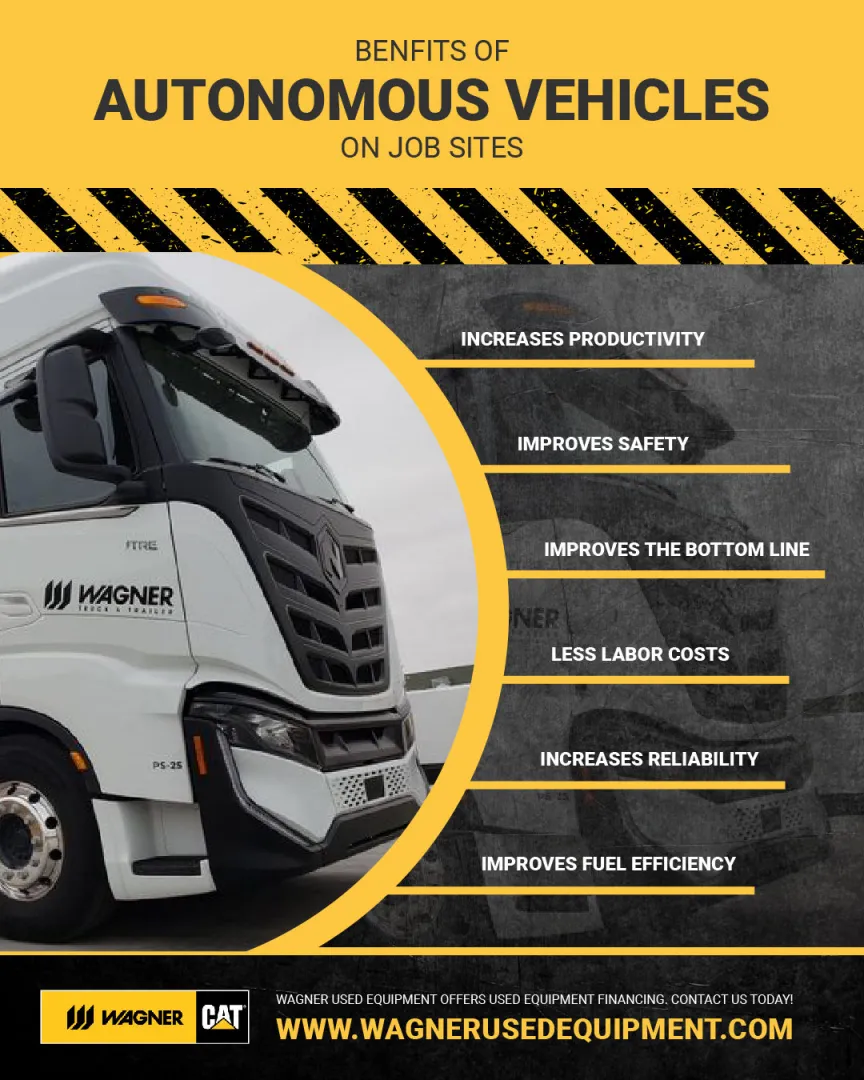
Benefits of Autonomous Vehicles on Job Sites
Productivity
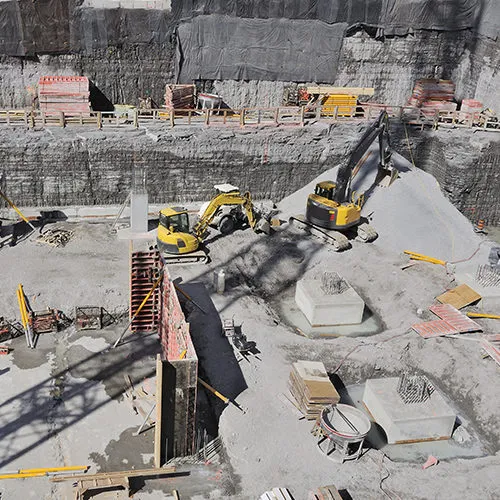
Thanks to the years of testing, autonomous trucks can now run more efficiently than human operators. Take a mining operation, for example. Trucks perform monotonous work all day long by hauling loads from Point A to Point B without stopping. Since vehicles don't get tired or distracted, they can handle this work better than humans can. This increases productivity, capacity, and efficiency immensely.
Safety
All job sites have some hazards inherent to the job and conditions. When discussing mining, autonomous vehicles keep operators safe because they have no operators onboard. This is perhaps best seen when it comes to blast radius implications. Humans cannot enter a blast radius zone, but autonomous trucks can. This means they can keep moving, whereas before, they would have had to wait till the blasting was over.
Improve the Bottom Line
Any time you see an improvement in productivity and efficiency, you'll see an improvement in the bottom line. This means that any company and/or operation can reinvest more money into more technology, products, and services that better this world. Examples include continuing to reduce environmental pollution, more automation in other operations, and an improved income for laborers.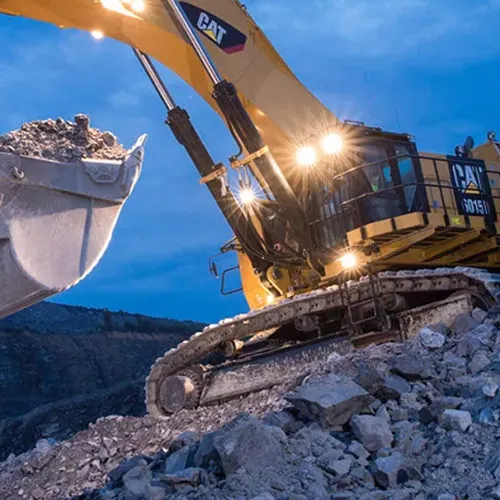
Less Labor Costs
When you don't have to have as many people driving trucks, your labor costs will decline significantly. This is important as there is currently a shortage of qualified workers for this type of heavy equipment work, so companies are having to do the same amount of work or more with less people. This can help companies grow and be more profitable, too.
Reliability
Let's face it, machines don't call in sick; they don't have kids to pick up and run to and fro, and they don't need to rest. They just go and go, unless they need maintenance. Thus, autonomous trucks are more reliable than humans due to the fact they aren't alive with a life. Plus, they don't need rest and aren't subject to labor laws. In fact, they can be run 24 hours a day if desired.