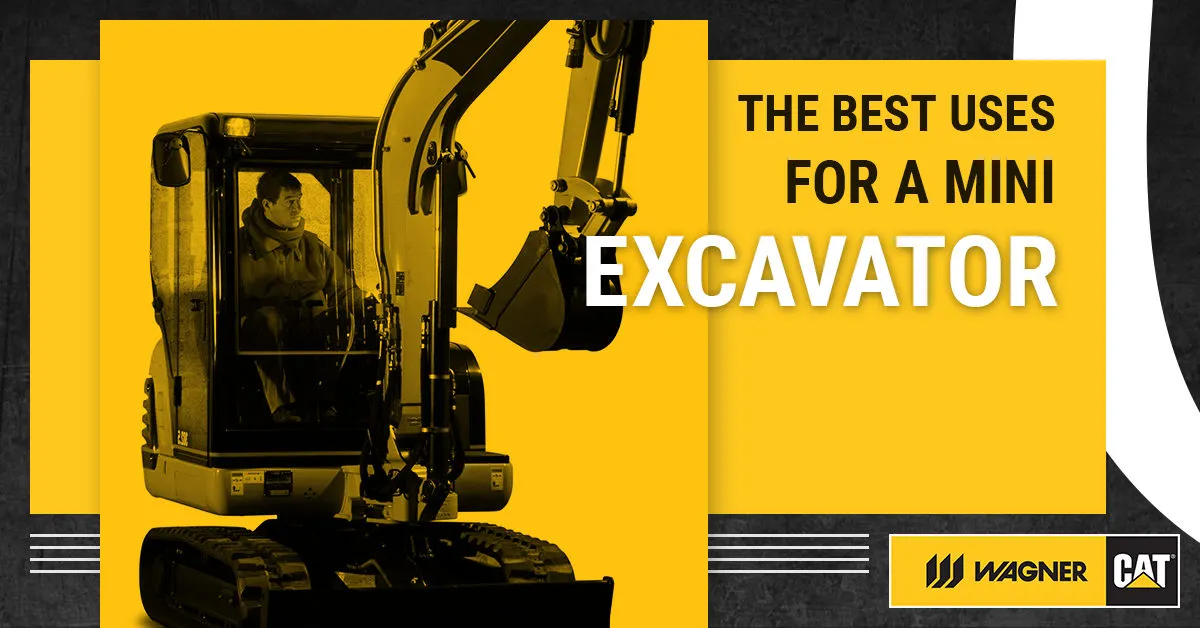
 Commonly used for construction projects, mini excavators have skyrocketed in popularity as a prime piece of heavy equipment. The most popular models are manufactured by Caterpillar, but regardless of brand, most mini excavators offer a plethora of useful functions and task-tackling tools.
In this article, we’ll learn all about the best uses for a mini excavator and shed some light on why these compact Cats are so revered by construction professionals around the nation.
Operation Basics
Before we get into the benefits of using a mini excavator, it’s important to understand how the machine itself works and how it’s operated.
All operators of construction equipment are thoroughly trained before conducting any work on the project site. Despite its name, the mini excavator can still weigh up to 12,000 pounds, so it’s vital that one operates the machine safely so as to minimize the chance of damage or injury.
The mini excavator is characterized by a rotating cab where the operator sits and maneuvers the various controls. These parts direct attachments and stationary components like the arm and the cab swiveler. However, the wheels or tracks tend only to move forward and backward, not left and right, so your multidirectional movement is somewhat limited to that extent.
If trained to use a mini excavator, you’ll likely become acquainted with the two main types of attachments — those used for demolition, and those used for digging. Whether you’re making a hole or making a mess, though, you’ll need to be certified to operate the various gizmos and gadgets that accompany your mini excavator, including compactor plates, rippers, compaction wheels, augers, and more.
Your mini excavator will likely either have wheels or tracks, depending on the terrain of your work site. You’ll need to be aware of how your surroundings may potentially interfere with or damage your equipment, which, of course, comes along with formalized training. Your supervisor and trainer will help determine what kind of brand of excavator is best, whether a Cat piece or otherwise, as well as determine the scope of the project, the work space limitations, and the natural behaviors of the terrain and environment.
Uses of a Mini Excavator
Once you’ve been certified to use a mini excavator, it’s time to reap the benefits of what this beast can do! There are so many different tasks that a piece of Cat equipment can tackle, but in particular, their mini excavators will be ideal for projects requiring digging or demolition of any kind.
In terms of digging tasks, the mini excavator can dig holes, trenches, and ditches. It can also dig out plots for garden ponds and take out massive tree stumps. If underground pipes need to be uprooted, it can do that too.
In regards to demolition, the mini excavator is a monster at tearing down smaller structures like sheds. Prior to a build, the relatively “tiny” but mighty machine will tamp down the terrain and landscape features to create a flat work surface.
On top of all this, the mini excavator can also be used to remove and haul materials, from snow to sand to boulders.
Conclusion
In this brief introduction to the uses of a mini excavator, we looked at basic training and an overview of the machine’s applications. To explore Caterpillar products like mini excavators and many more, please visit our website today!
Commonly used for construction projects, mini excavators have skyrocketed in popularity as a prime piece of heavy equipment. The most popular models are manufactured by Caterpillar, but regardless of brand, most mini excavators offer a plethora of useful functions and task-tackling tools.
In this article, we’ll learn all about the best uses for a mini excavator and shed some light on why these compact Cats are so revered by construction professionals around the nation.
Operation Basics
Before we get into the benefits of using a mini excavator, it’s important to understand how the machine itself works and how it’s operated.
All operators of construction equipment are thoroughly trained before conducting any work on the project site. Despite its name, the mini excavator can still weigh up to 12,000 pounds, so it’s vital that one operates the machine safely so as to minimize the chance of damage or injury.
The mini excavator is characterized by a rotating cab where the operator sits and maneuvers the various controls. These parts direct attachments and stationary components like the arm and the cab swiveler. However, the wheels or tracks tend only to move forward and backward, not left and right, so your multidirectional movement is somewhat limited to that extent.
If trained to use a mini excavator, you’ll likely become acquainted with the two main types of attachments — those used for demolition, and those used for digging. Whether you’re making a hole or making a mess, though, you’ll need to be certified to operate the various gizmos and gadgets that accompany your mini excavator, including compactor plates, rippers, compaction wheels, augers, and more.
Your mini excavator will likely either have wheels or tracks, depending on the terrain of your work site. You’ll need to be aware of how your surroundings may potentially interfere with or damage your equipment, which, of course, comes along with formalized training. Your supervisor and trainer will help determine what kind of brand of excavator is best, whether a Cat piece or otherwise, as well as determine the scope of the project, the work space limitations, and the natural behaviors of the terrain and environment.
Uses of a Mini Excavator
Once you’ve been certified to use a mini excavator, it’s time to reap the benefits of what this beast can do! There are so many different tasks that a piece of Cat equipment can tackle, but in particular, their mini excavators will be ideal for projects requiring digging or demolition of any kind.
In terms of digging tasks, the mini excavator can dig holes, trenches, and ditches. It can also dig out plots for garden ponds and take out massive tree stumps. If underground pipes need to be uprooted, it can do that too.
In regards to demolition, the mini excavator is a monster at tearing down smaller structures like sheds. Prior to a build, the relatively “tiny” but mighty machine will tamp down the terrain and landscape features to create a flat work surface.
On top of all this, the mini excavator can also be used to remove and haul materials, from snow to sand to boulders.
Conclusion
In this brief introduction to the uses of a mini excavator, we looked at basic training and an overview of the machine’s applications. To explore Caterpillar products like mini excavators and many more, please visit our website today!
Commonly used for construction projects, mini excavators have skyrocketed in popularity as a prime piece of heavy equipment. The most popular models are manufactured by Caterpillar, but regardless of brand, most mini excavators offer a plethora of useful functions and task-tackling tools.
In this article, we’ll learn all about the best uses for a mini excavator and shed some light on why these compact Cats are so revered by construction professionals around the nation.
Operation Basics
Before we get into the benefits of using a mini excavator, it’s important to understand how the machine itself works and how it’s operated.
All operators of construction equipment are thoroughly trained before conducting any work on the project site. Despite its name, the mini excavator can still weigh up to 12,000 pounds, so it’s vital that one operates the machine safely so as to minimize the chance of damage or injury.
The mini excavator is characterized by a rotating cab where the operator sits and maneuvers the various controls. These parts direct attachments and stationary components like the arm and the cab swiveler. However, the wheels or tracks tend only to move forward and backward, not left and right, so your multidirectional movement is somewhat limited to that extent.
If trained to use a mini excavator, you’ll likely become acquainted with the two main types of attachments — those used for demolition, and those used for digging. Whether you’re making a hole or making a mess, though, you’ll need to be certified to operate the various gizmos and gadgets that accompany your mini excavator, including compactor plates, rippers, compaction wheels, augers, and more.
Your mini excavator will likely either have wheels or tracks, depending on the terrain of your work site. You’ll need to be aware of how your surroundings may potentially interfere with or damage your equipment, which, of course, comes along with formalized training. Your supervisor and trainer will help determine what kind of brand of excavator is best, whether a Cat piece or otherwise, as well as determine the scope of the project, the work space limitations, and the natural behaviors of the terrain and environment.
Uses of a Mini Excavator
Once you’ve been certified to use a mini excavator, it’s time to reap the benefits of what this beast can do! There are so many different tasks that a piece of Cat equipment can tackle, but in particular, their mini excavators will be ideal for projects requiring digging or demolition of any kind.
In terms of digging tasks, the mini excavator can dig holes, trenches, and ditches. It can also dig out plots for garden ponds and take out massive tree stumps. If underground pipes need to be uprooted, it can do that too.
In regards to demolition, the mini excavator is a monster at tearing down smaller structures like sheds. Prior to a build, the relatively “tiny” but mighty machine will tamp down the terrain and landscape features to create a flat work surface.
On top of all this, the mini excavator can also be used to remove and haul materials, from snow to sand to boulders.
Conclusion
In this brief introduction to the uses of a mini excavator, we looked at basic training and an overview of the machine’s applications. To explore Caterpillar products like mini excavators and many more, please visit our website today!
Commonly used for construction projects, mini excavators have skyrocketed in popularity as a prime piece of heavy equipment. The most popular models are manufactured by Caterpillar, but regardless of brand, most mini excavators offer a plethora of useful functions and task-tackling tools.
In this article, we’ll learn all about the best uses for a mini excavator and shed some light on why these compact Cats are so revered by construction professionals around the nation.
Operation Basics
Before we get into the benefits of using a mini excavator, it’s important to understand how the machine itself works and how it’s operated.
All operators of construction equipment are thoroughly trained before conducting any work on the project site. Despite its name, the mini excavator can still weigh up to 12,000 pounds, so it’s vital that one operates the machine safely so as to minimize the chance of damage or injury.
The mini excavator is characterized by a rotating cab where the operator sits and maneuvers the various controls. These parts direct attachments and stationary components like the arm and the cab swiveler. However, the wheels or tracks tend only to move forward and backward, not left and right, so your multidirectional movement is somewhat limited to that extent.
If trained to use a mini excavator, you’ll likely become acquainted with the two main types of attachments — those used for demolition, and those used for digging. Whether you’re making a hole or making a mess, though, you’ll need to be certified to operate the various gizmos and gadgets that accompany your mini excavator, including compactor plates, rippers, compaction wheels, augers, and more.
Your mini excavator will likely either have wheels or tracks, depending on the terrain of your work site. You’ll need to be aware of how your surroundings may potentially interfere with or damage your equipment, which, of course, comes along with formalized training. Your supervisor and trainer will help determine what kind of brand of excavator is best, whether a Cat piece or otherwise, as well as determine the scope of the project, the work space limitations, and the natural behaviors of the terrain and environment.
Uses of a Mini Excavator
Once you’ve been certified to use a mini excavator, it’s time to reap the benefits of what this beast can do! There are so many different tasks that a piece of Cat equipment can tackle, but in particular, their mini excavators will be ideal for projects requiring digging or demolition of any kind.
In terms of digging tasks, the mini excavator can dig holes, trenches, and ditches. It can also dig out plots for garden ponds and take out massive tree stumps. If underground pipes need to be uprooted, it can do that too.
In regards to demolition, the mini excavator is a monster at tearing down smaller structures like sheds. Prior to a build, the relatively “tiny” but mighty machine will tamp down the terrain and landscape features to create a flat work surface.
On top of all this, the mini excavator can also be used to remove and haul materials, from snow to sand to boulders.
Conclusion
In this brief introduction to the uses of a mini excavator, we looked at basic training and an overview of the machine’s applications. To explore Caterpillar products like mini excavators and many more, please visit our website today!